How Weather Patterns Shape Multi-Sport Betting Volumes Across Horse Racing, Cricket, and Live Casino Tables
Weather systems move across regions and create measurable shifts in how people place wagers on horse racing, cricket matches, and live casino tables, because each sport responds differently to rain, temperature swings, and storm activity. Observers note that these changes appear in daily volume reports compiled by operators and industry trackers, while researchers track correlations between specific weather events and the number of active betting accounts.
Horse Racing Responds Directly to Track Conditions
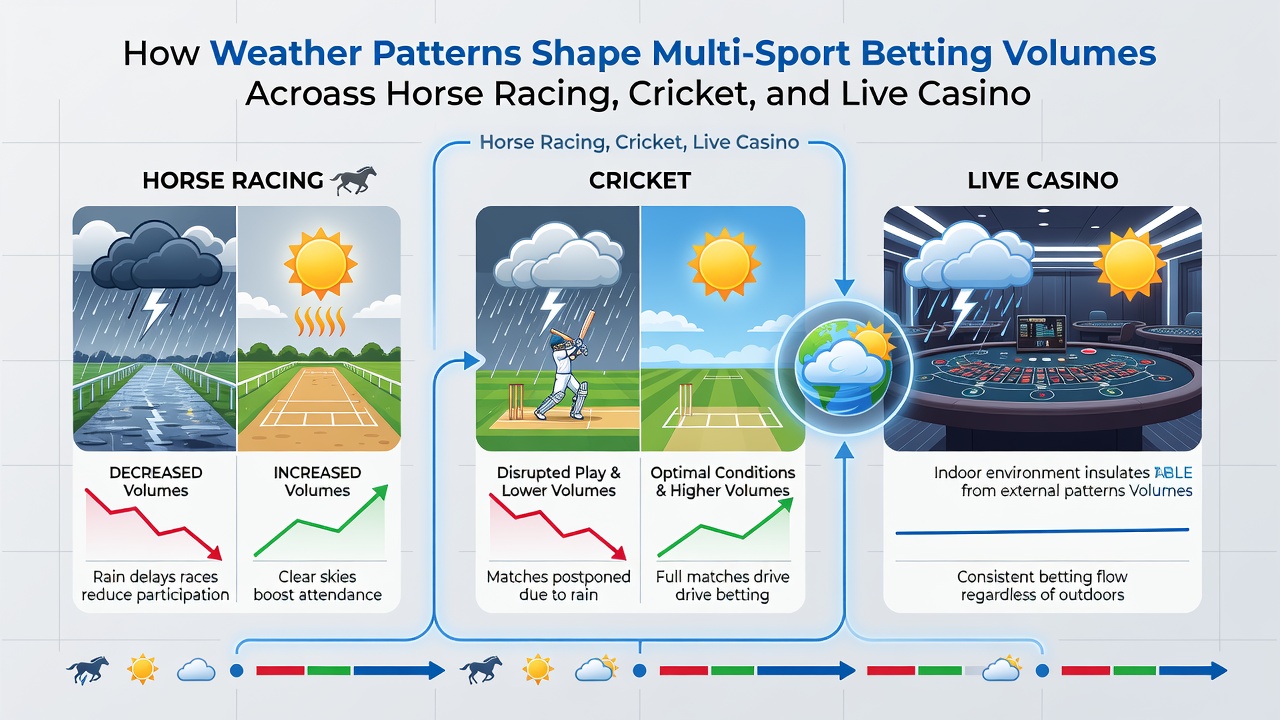
Rainfall alters ground conditions on turf courses within hours, prompting officials to change going descriptions from firm to soft or heavy, and those adjustments often coincide with spikes in bets on horses suited to softer surfaces. Data from multiple racing jurisdictions show that wet weather weeks produce higher volumes on jump meetings where mud runners dominate the card, whereas dry spells shift interest toward flat races on fast ground. When heavy storms force abandonments, betting on the affected meetings drops sharply and punters redirect stakes to later fixtures or other sports available on the same platforms. In August 2026, prolonged showers across parts of Europe and Australia led to multiple postponements that reduced on-course attendance yet sustained online volumes as bettors followed replays and alternative meetings listed by bookmakers.
Cricket Matches Pause or Shorten Under Rain
Cricket schedules depend on clear skies because even brief showers can interrupt play and trigger Duckworth-Lewis adjustments that change match outcomes and betting markets. Studies compiled by meteorology services indicate that overcast days with high precipitation probability reduce live in-play betting on test matches and limited-overs games, since suspended sessions leave markets frozen until resumption. One analysis of major tournaments found that series played in monsoon-prone zones experience lower daily handle during peak rainy periods, while drier seasons generate steadier volumes across all formats. Operators respond by expanding weather-related specials such as rain-delay wagers or team performance under different pitch conditions, and these markets attract additional interest when forecasts show unsettled conditions. Researchers tracking global cricket data have linked extended dry spells to increased participation in fantasy and spread betting products tied to individual player statistics.
Live Casino Tables See Indirect Shifts from Storms
Live dealer tables operate indoors or online, so direct weather effects remain limited, yet broader patterns emerge when severe weather keeps populations at home and increases screen time. Reports from gaming associations in North America and parts of Asia record modest rises in table game sessions during winter storms or summer hurricanes, because players who might otherwise visit land-based venues stay connected through mobile apps. Temperature extremes also correlate with changes in session length, as people seek indoor entertainment during heatwaves or cold snaps. In August 2026, tropical storm activity along coastal regions coincided with temporary upticks in roulette and blackjack tables streamed from studios, while sports betting on outdoor events dipped during the same window. Industry figures reveal that these movements stay smaller than those seen in racing or cricket, yet they still register in hourly traffic metrics tracked by platform providers.
Combined Data Patterns Across Sports
Operators who cover all three verticals observe that weather events rarely affect every product equally, so volume lost on one channel sometimes migrates to another. A wet weekend that cancels horse races may push some bettors toward cricket markets if matches continue under covered stadiums, while others move to live casino tables for uninterrupted play. According to records maintained by the National Oceanic and Atmospheric Administration, seasonal forecasts released ahead of major racing carnivals and cricket tours help platforms adjust promotional calendars and risk limits. Academic work published through Canadian research institutions has examined multi-year datasets and identified consistent percentage shifts in handle tied to precipitation totals and wind speeds, although the magnitude varies by jurisdiction and betting format. Those same studies note that live casino volumes show the smallest weather sensitivity yet still register measurable responses during prolonged indoor confinement periods.
Regional Differences in Weather Sensitivity
Australia's Bureau of Meteorology supplies detailed rainfall and temperature grids that racing bodies use to schedule meetings and that betting firms incorporate into predictive models for volume forecasts. In contrast, European operators rely more on short-term alerts for sudden storms that can halt cricket or soften gallops tracks overnight. North American data from state-level gaming reports show that winter weather events produce clearer indoor gaming increases than summer patterns, whereas southern hemisphere markets experience stronger cricket-related swings during their wet seasons. These geographic distinctions appear in aggregated industry summaries released by trade groups, and they guide how international betting sites allocate marketing spend across different sports during forecast periods.
Conclusion
Weather patterns therefore influence betting volumes through direct cancellations in horse racing and cricket, alongside subtler behavioral changes around live casino participation. The documented correlations rely on meteorological records, operator traffic logs, and academic reviews that together demonstrate measurable, repeatable effects across seasons and regions. As forecasting improves and platforms refine real-time adjustments, those links between atmospheric conditions and wagering activity continue to shape operational decisions in each sector.